


Shipping container pools: pros and cons
A shipping container pool can turn a garden into a place to enjoy summer, with a distinctive look and much of the work completed in a factory. But is it the right solution for your site? That depends on access, available space and how you want to use the pool. This guide explores the advantages and limitations to help you decide.
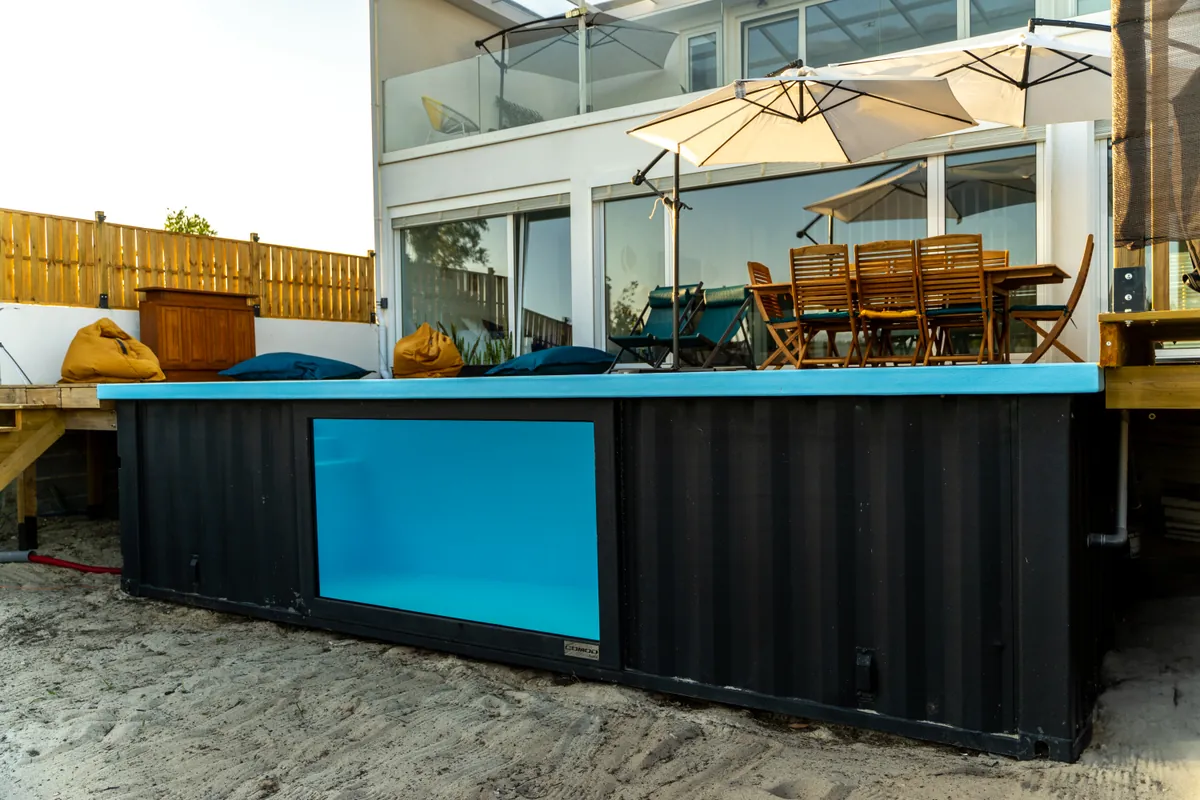
What is a container pool?
A container pool starts with a shipping container adapted to hold water and bathers. The conversion involves design, structural modifications and reinforcement, waterproofing or an internal lining, and filtration equipment. Simply filling a container with water is not enough. Depending on the design, a pool can sit above ground, partly below ground or fully in-ground, with appropriate supports, drainage and access for maintenance.
The advantages
More affordable
Factory preparation and less work on site can offer a more affordable solution than traditional construction. The investment depends on the model, finishes and installation conditions, helping you choose a pool that suits your budget.
Easy and more affordable maintenance
With appropriately sized filtration and water treatment, regular cleaning and water care are straightforward. Choosing a model with a smaller water volume and efficient equipment can reduce consumption and make maintenance more affordable.
The option to move your pool in the future
If you move house or want to rearrange your outdoor space, relocating the pool may be possible. The move should be planned around the structure, installation type and access, with draining, transport and placement handled by a specialist team.
The option to resell your pool
Being able to remove and transport the pool also opens up the possibility of reselling it in the future. Its condition, model and the requirements for removal and installation at the new site are factors to consider in a potential sale.
The drawbacks
Access can limit installation
Truck access and lifting, often by crane, need planning. Narrow roads, overhead cables, trees and limited manoeuvring space can increase complexity and cost. The foundation must be designed for a full pool; seemingly flat ground is no substitute for a site assessment.
The shape has limits
Container geometry suits rectangular pools and may restrict usable width. If you want organic shapes, a generous shallow lounging area or room for several people to swim side by side, compare other options. Structural changes and bespoke models need their own assessment and may increase the budget.
Before you buy
- Measure the site, access routes and space around the pool. Request a site assessment before placing an order.
- Decide how you will use it: cooling off, family play, swimming or a longer season. Compare internal dimensions and depth.
- Request an itemised quote covering the pool, transport, lifting, preparation, connections, equipment, taxes and exclusions.
- Check the procedures relevant to the site and proposed installation with the local authority and your project professionals.
- Clarify materials, corrosion protection, maintenance, warranties and support after installation.
- Plan safe access, protection for children, a cover and sufficient space to service the equipment.
Is it worth it?
A container pool makes sense when you value a defined design, factory preparation and a planned installation. It needs the same care as any pool when it comes to materials, safety and maintenance. Compare quotes for the complete project and choose what suits your space and use. At Jomipools, you can start by exploring models and finishes, then discuss your site conditions with our team.
Explore completed projects